
At Babylon CrossFit, we talk a lot about strength, mobility, core stability, recovery, and taking care of our bodies. But there’s one important part of our body that deserves more attention: our pelvic floor.
As your gym owner, I want our community to understand that pelvic floor health is not something we should ignore, be embarrassed about, or simply accept as part of getting older, having children, or lifting heavy weights. Besides no one loves talking about vaginas and buttholes more than me!
We can talk about it more. We can learn more about it. And most importantly, we can make sure our members know where to turn when they need help.
Because being strong isn't just about how much weight you can lift. It's also about how well your body functions.
Your pelvic floor is a group of muscles and connective tissues that form a supportive base at the bottom of your pelvis, EVERYONE HAS ONE!
These muscles help support your pelvic organs, contribute to bladder and bowel control, support sexual function, and work with your diaphragm and abdominal muscles to manage pressure throughout your body.
Think of your core as a team. Your diaphragm, abdominal muscles, back muscles, and pelvic floor all work together to help you stabilize your body during movement.
And just like any other muscle group, the pelvic floor needs the right combination of strength, coordination, endurance, and relaxation.
Here's something important to understand: a healthy pelvic floor isn't simply a tight or strong pelvic floor. It also needs to relax and coordinate properly.
That's why doing endless Kegels isn't necessarily the answer for everyone. Some people need to improve strength, while others may need help with muscle tension, coordination, or learning how to manage pressure.
A lot!
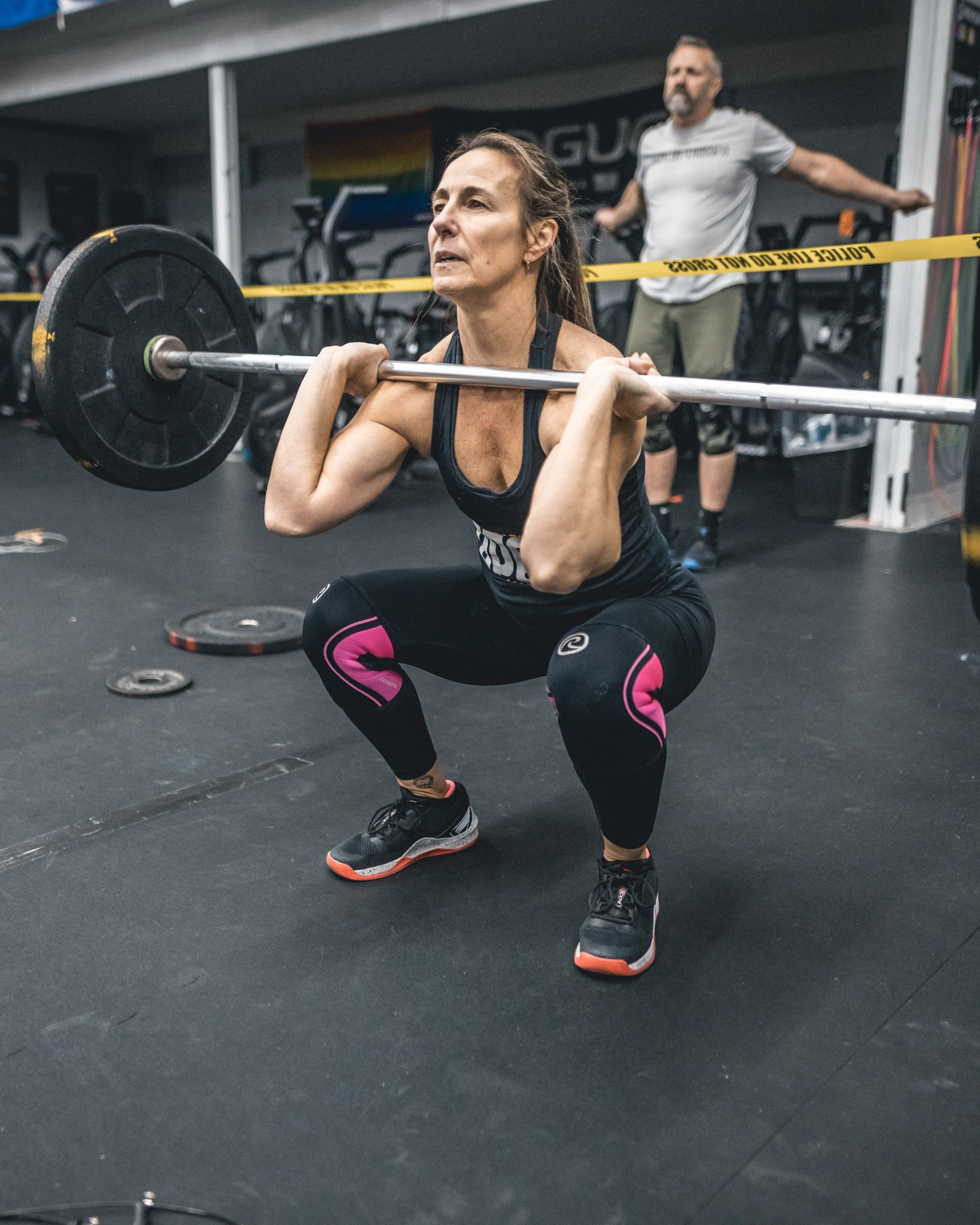
Think about what we ask our bodies to do in class:
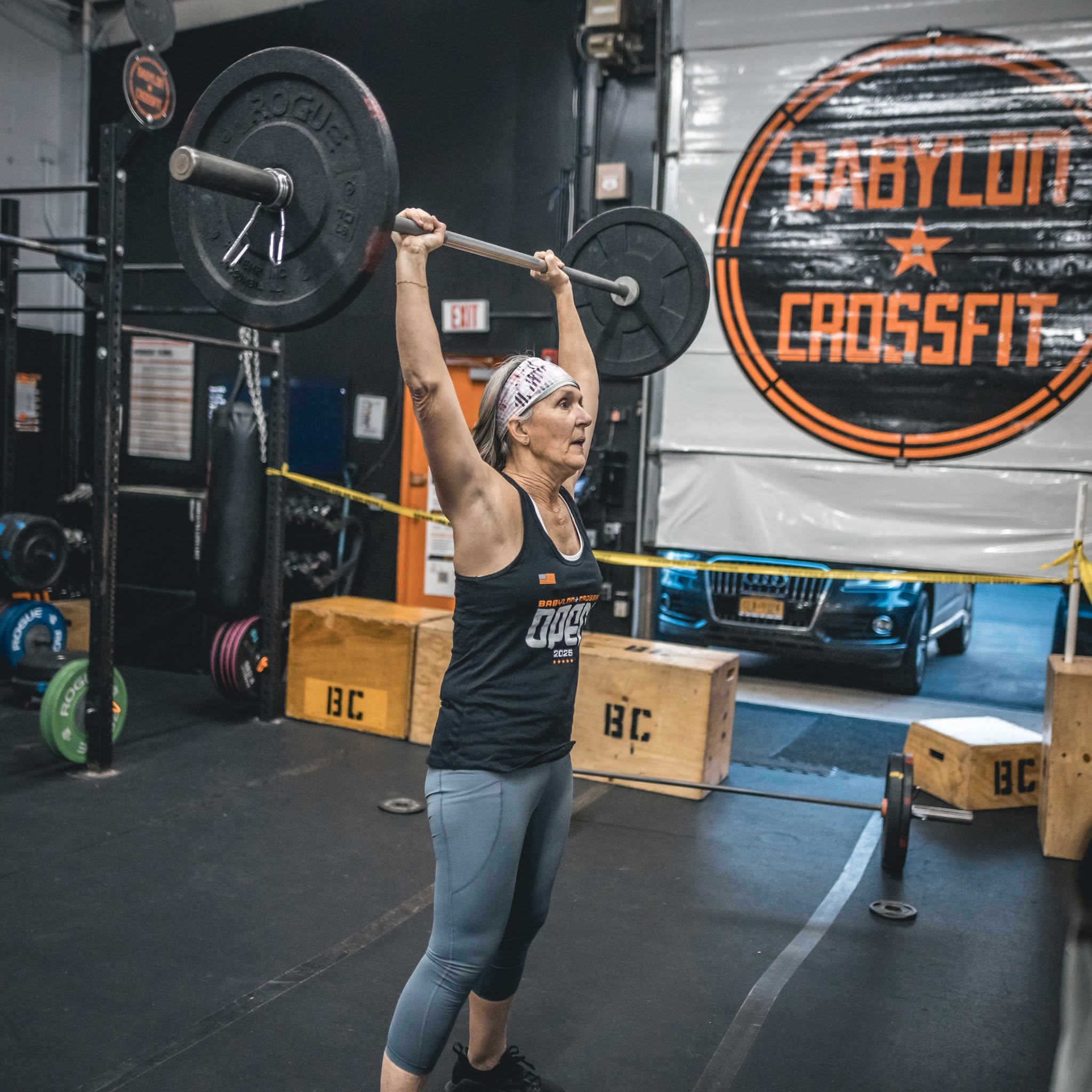
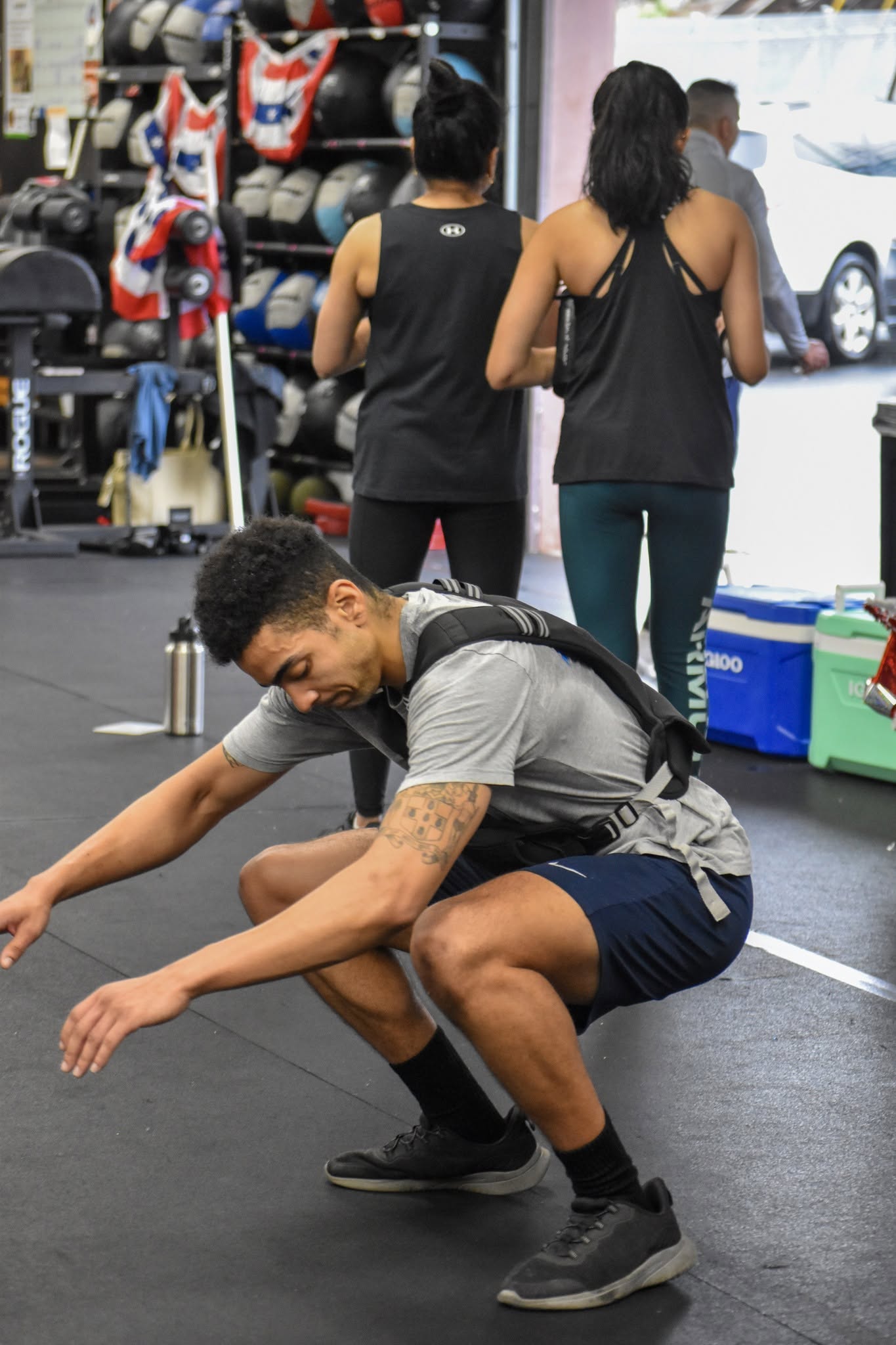
These movements challenge the body's ability to manage pressure and coordinate breathing with effort. That includes the pelvic floor.
For some athletes, symptoms may show up during a workout. For others, they may appear later in the day or during everyday activities.
Research has documented pelvic floor symptoms among female CrossFit athletes, including urinary leakage. This is a reason to educate athletes and make appropriate care accessible, not a reason to assume CrossFit is inherently harmful. Read the research on pelvic floor symptoms in CrossFit athletes.
Our goal is to help you train in a way that supports your performance and your long-term health.
Let's normalize talking about the signs that something may need attention.
Pelvic floor symptoms can affect women and men, athletes and non-athletes, and people at different stages of life.
Pay attention if you experience:
These symptoms can have different causes, and having one doesn't automatically mean you have pelvic floor dysfunction.
But they are worth discussing with a healthcare professional, particularly if they persist, worsen, or interfere with your training or daily life. Many pelvic floor conditions can be treated or managed.
Peeing during double-unders is common enough to talk about, but it isn't something you simply have to live with.
You don't have to stop being active, give up lifting, or feel embarrassed in class. You deserve an individualized assessment and a plan that helps you work toward your goals.
When people hear “pelvic floor,” they often immediately think of Kegels.
Kegels are exercises that contract the pelvic floor muscles. They can be helpful for some conditions when performed correctly, but they're not the right starting point for every person.
A pelvic floor that is already overactive or unable to relax may need a different approach. Some people benefit from learning to relax the muscles, coordinate their breathing, improve mobility, or address other contributing factors before focusing on strengthening.
This is why an individualized evaluation matters.
A pelvic health physical therapist can assess your symptoms, muscle function, breathing and pressure management, and movement patterns to help determine what approach is appropriate for you.
Here are some practical principles to keep in mind during your training.
1. Pay attention to your breathing.
Your breathing and pelvic floor work together. Learn how to coordinate your breath with effort rather than habitually holding your breath through every repetition. Some heavy lifts require bracing, so the goal is not to eliminate bracing; it is to learn an appropriate strategy for your body and the task.
2. Don't ignore symptoms to finish the workout.
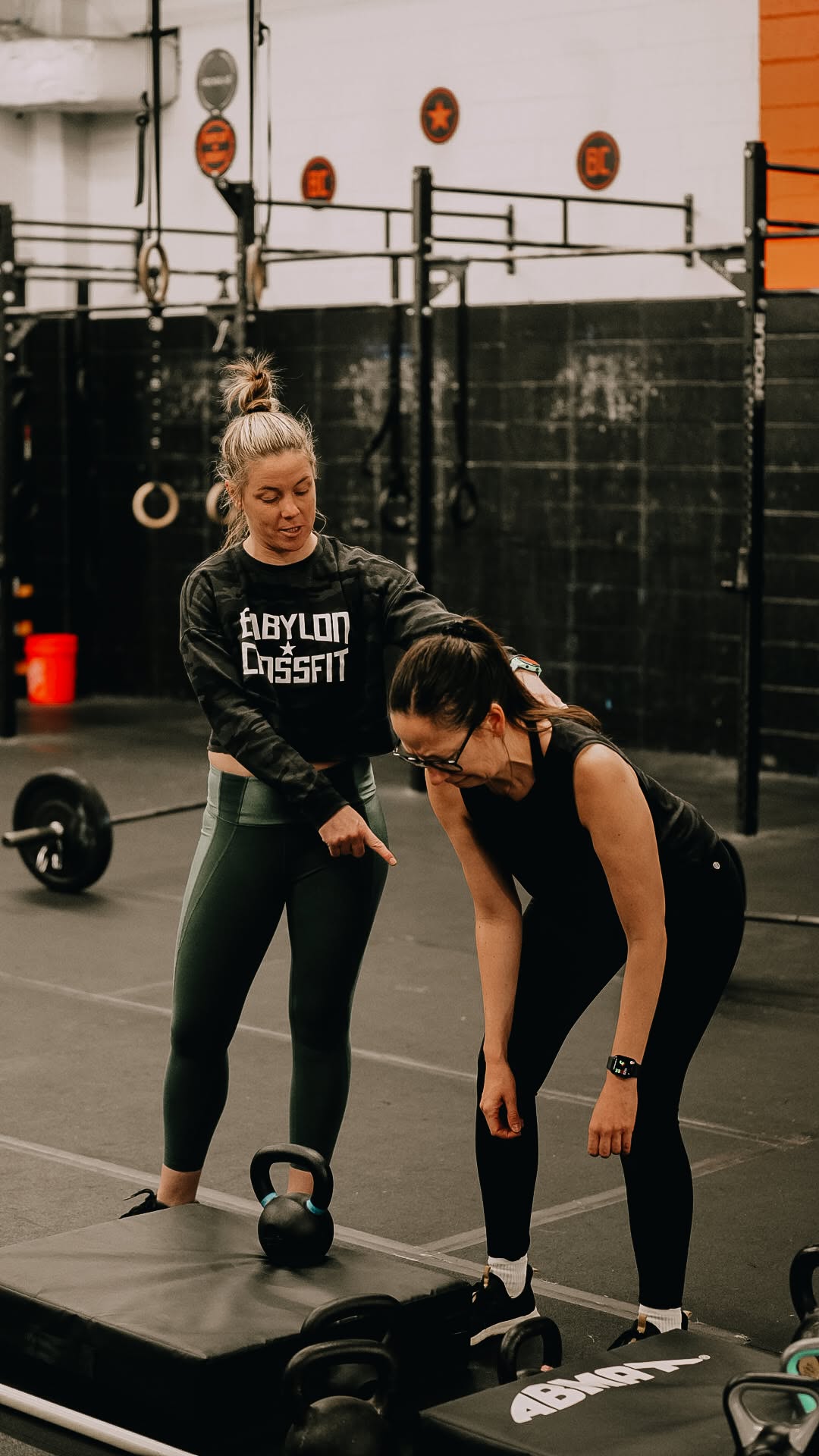
If you experience leakage, pain, or pelvic heaviness, tell your coach privately. We can discuss modifications while you seek appropriate evaluation.
3. Scale when needed.
Depending on your symptoms, a temporary change in impact, load, repetitions, or movement selection may help you continue training more comfortably. Scaling is not failure. It is a tool for training intelligently.
4. Give recovery the same attention as training.
Sleep, hydration, adequate nutrition, regular bowel habits, and recovery all contribute to overall health. Avoid repeatedly straining during bowel movements, and seek professional guidance for persistent constipation.
5. Get help before symptoms become a bigger obstacle.
You don't have to wait until symptoms interfere with every workout. If something feels off, an assessment can help you understand what's happening and what to do next.
At Babylon CrossFit, our role is to coach movement, provide appropriate exercise modifications, and help you recognize when you may benefit from additional support.
We are not here to diagnose pelvic floor conditions. Although you will find Trish wanting to go back to school to be a doctor, we work with qualified pelvic health physical therapist can make a real difference.
When looking for a provider, ask whether they have specialized training in pelvic health, experience treating active people and athletes, and the ability to develop an individualized return-to-exercise plan.
Depending on your needs, treatment may include therapeutic exercise, breathing and coordination work, relaxation strategies, manual therapy, bladder or bowel habit education, and a gradual return to your preferred activities.
Internal examinations are not automatically required for every visit. If an internal examination is recommended, your therapist should explain why, discuss alternatives, and obtain your informed consent.
Here are a few starting points for our Babylon CrossFit community. These are independent healthcare providers, not endorsements or guarantees of a particular treatment outcome. Please confirm current services, availability, insurance coverage, and suitability for your individual needs. See attached.
I bring up pelvic floor health because I care about more than your PRs, your scores on the whiteboard, or how much weight you can lift.
I care about how you feel when you leave the gym. I care about your ability to run, jump, laugh, sneeze, and move through your day confidently. I care about helping you stay active for years to come.
And I want every member of this community to know that you can ask questions without embarrassment.
You don't have to share personal medical information in front of the class. You don't have to push through symptoms to prove you're strong. And you don't have to figure everything out on your own.
Strength includes knowing when to ask for help.
Let's continue having these conversations, supporting one another, and making pelvic health part of how we think about fitness, performance, and longevity.
Because at Babylon CrossFit, we're not just building stronger athletes. We're building healthier, more informed people.
Have you ever wondered how your pelvic floor works during lifting, jumping, or running? Is there a topic you'd like us to cover in a future educational post?
Send us your questions privately, or speak with a coach after class. NOVEMEBER 10th, 7pm at is our next Pelvic Floor Seminar at Sectagoue Brewery. Dont miss it!
Babylon CrossFit: Strong from the inside out.
Educational note: This article is for general information and is not a substitute for individualized medical assessment or treatment. Seek prompt medical attention for sudden severe pelvic pain, inability to urinate, or new loss of bladder or bowel control accompanied by saddle-area numbness or leg weakness.