As both a coach and a woman navigating menopause, I understand first hand that this season of life can feel like an uphill battle. The pressure to perform consistently in the gym can become a major source of frustration, especially when progress feels stalled by unexpected setbacks. However, it doesn’t have to be a struggle of "willpower" alone.
Understanding the physiological shifts of this transition is the "secret weapon" that changes everything. It is the difference between wobbling on training wheels and catapulting yourself into what can be the most rewarding stage of your life. When you bridge the gap between biological knowledge and actionable training strategies, the results are more than just physical—they are liberating.
This journey isn't strictly about sets and reps; it is deeply emotional and mental. We all know the cycle: some days you enter the gym "gung-ho," ready to conquer the world. Other days, simply getting out of bed feels like a victory.
Yet, you show up anyway. You do it because you know that consistency is the foundation. There is a quiet power in honoring your commitment to yourself, even on the low-energy days. We know that failing to show up often leads to a cycle of self-regret—a "dangerous slide" that can be hard to climb back up. By showing up, you aren't just training your body; you are protecting your momentum and reclaiming your strength.
Sometimes, the body is simply exhausted. Maybe you haven't slept, or life’s stressors have left you drained. In these moments, you just need to move—and that is okay. We have to stop beating ourselves up for scaling a workout.
Choosing a lighter load or reducing the repetitions isn't a sign of defeat; during menopause, scaling is exactly the right move. It’s not about doing more for the sake of it; it’s about doing it right. It’s about meeting yourself exactly where you are today with the right amount of intensity.
By adjusting your volume to match your current energy, you protect your long-term progress. Your ultimate goal remains the same: to maintain and build muscle through consistent strength training. When you scale effectively, you ensure you can stay in the game for the long haul,
To help you navigate your daily energy, use this simple "Stoplight" framework:
Day Type
How You Feel
The Action Plan
Green Days
Strong, energized, "Gung-ho."
Lift heavy, push the intensity, and go for it.
Yellow Days
Tired, "meh," or unmotivated.
Shorten the session, scale the load, and just move.
Red Days
Poor sleep, high stress, or drained.
Skip the intensity guilt-free. Walk, do yoga, or stretch.

If you are looking for a simple weekly structure, try this:
On your toughest weeks, simplify even further: Aim for 2 strength days and daily walking. Walking is non-negotiable—it’s as much for your mental clarity as it is for your physical health.
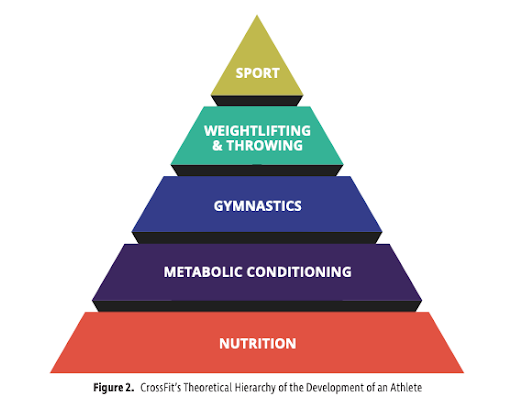
If strength training is the engine, protein is the fuel. Eating adequate protein is one of the most powerful things you can do to combat muscle loss and fat gain. Here is why it is non-negotiable:
How much is enough? The current recommendation is 1 gram of protein per pound of body weight.
As we age, our bodies become less efficient at absorbing protein, so hitting this mark is vital. While that number might sound daunting, consistency is key. Focus on incorporating various high-quality sources throughout your day to let those small wins add up
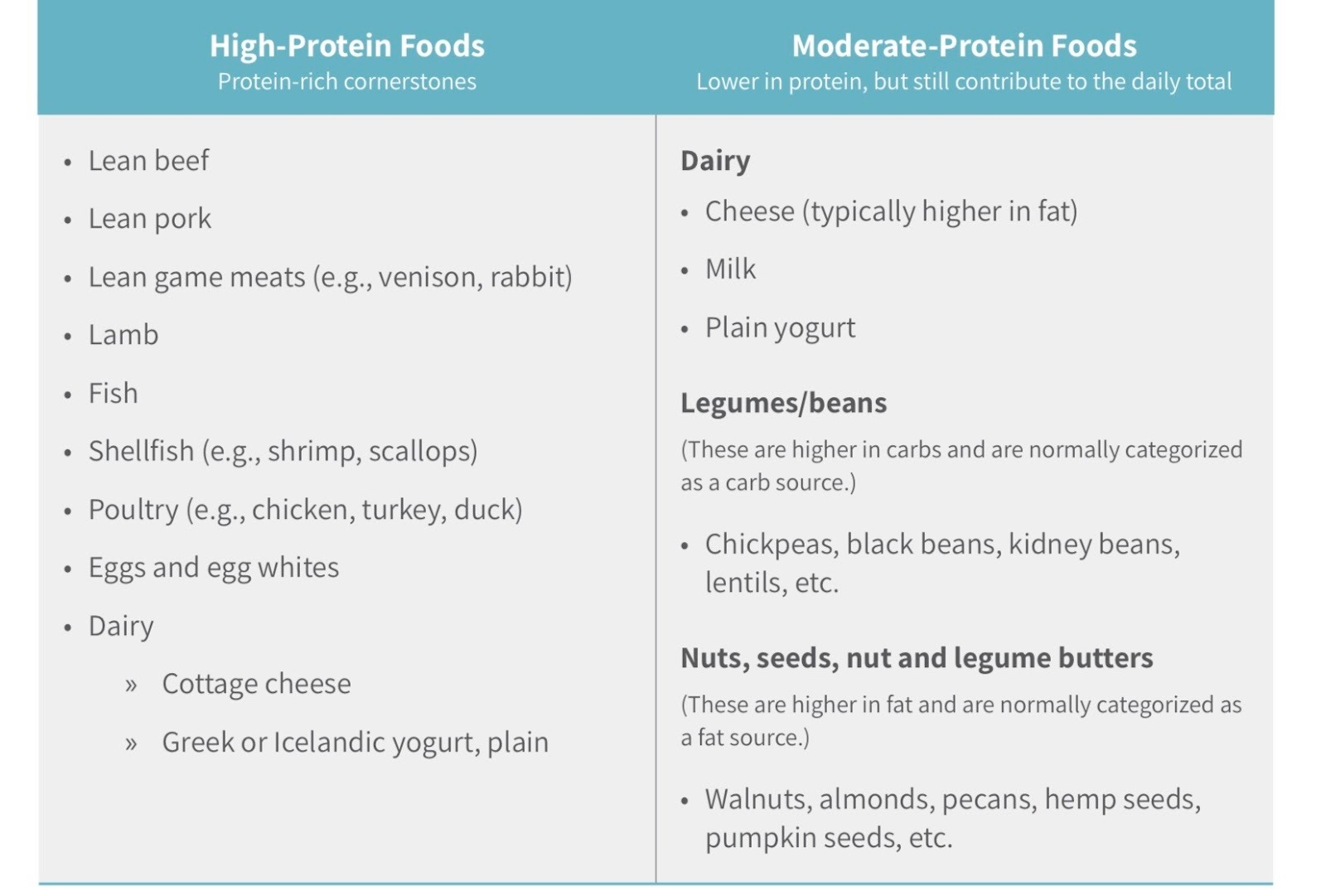
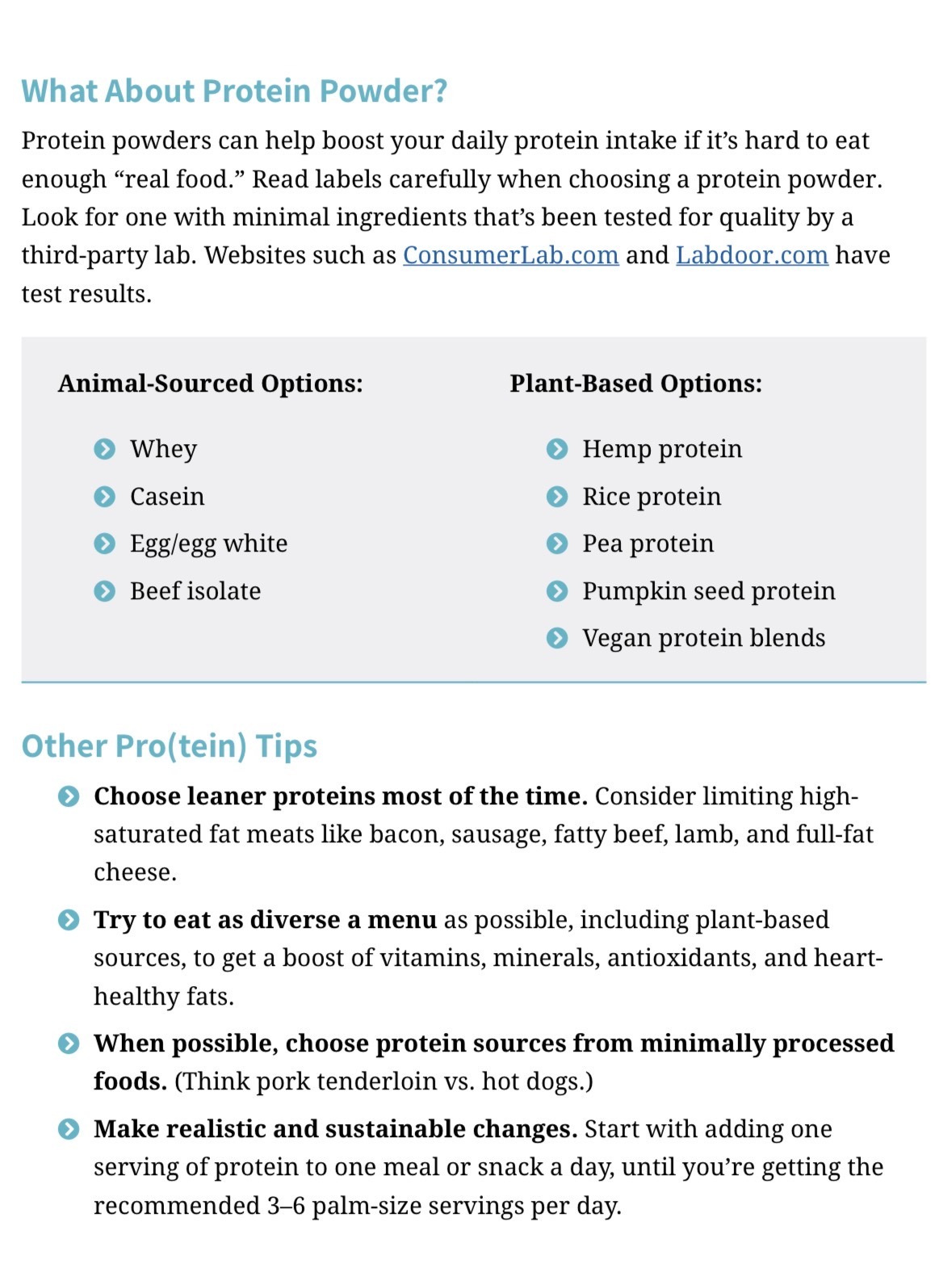
Below are some guidelines to help navigate the different types of Protein choices..






























.jpg)